
Our policy since 2025
Centrality of the Local Church
We do not use the local church to build the denomination; we use the denomination to build the local church.
Hindi natin ginagamit ang local church para palakihin ang denominasyon. Ginagamit natin ang denominasyon para palakasin ang local church.
Resolution 06-2025
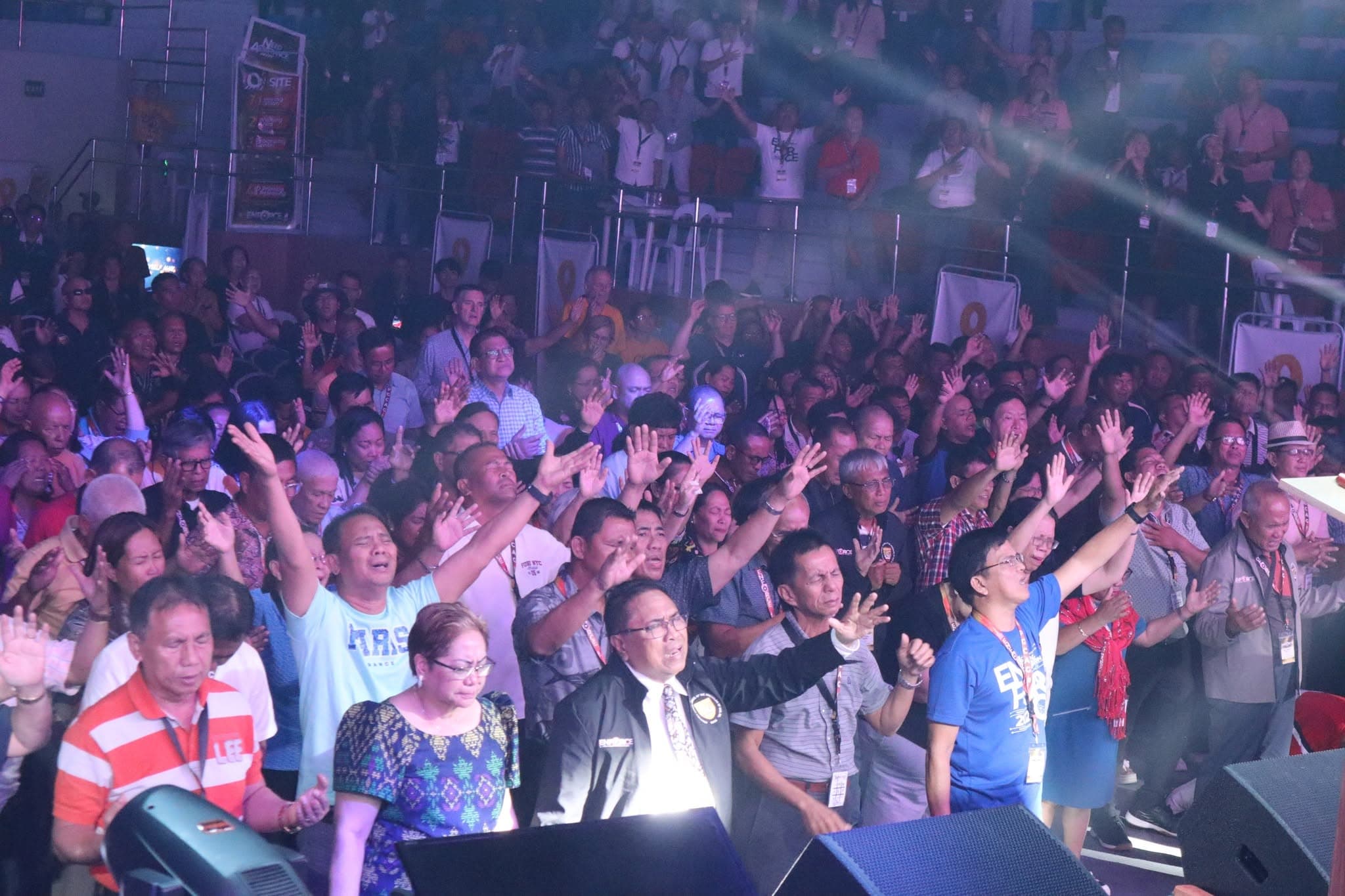
Every Sunday, in a town plaza chapel, a rented room, a mountain barangay, or a city sanctuary, the local church is doing the work of the Kingdom. It is the pastor who knows every family by name, and the congregation that shows up when someone is sick, grieving, or starting over. That is why PGCAG has recommitted to a simple biblical conviction: the local church is central, and the General Council, its districts and its commissions exist to serve it.
What it means for your church
Your church decides, in your context
Toolkits, not templates. Your pastor and leaders shape ministry for your own community. National and district programs are offered to adapt, not imposed to copy.
Support without control
Training that raises local leaders instead of replacing them. Commissions come alongside your church by invitation, as partners in the mission, with relational accountability rather than compliance.
Resources flow to churches
Materials, coaching and funding move toward the local church. Sermon series, discipleship paths, planting support and financial training are built to be used where the ministry happens.
No church left behind, big or small
Every church deserves access to support, regardless of size or influence. Ministries are hosted by the local church so that its name is the one known in its community, whether urban or rural, large or house-sized.
Why: the Bible and our roots
“So Christ himself gave the apostles, the prophets, the evangelists, the pastors and teachers, to equip his people for works of service, so that the body of Christ may be built up.”
“His intent was that now, through the church, the manifold wisdom of God should be made known to the rulers and authorities in the heavenly realms, according to his eternal purpose that he accomplished in Christ Jesus our Lord.”
The denomination is not the foundation; it is the scaffolding that helps God’s building, the local church, rise strong. The Assemblies of God was formed in 1914 as a cooperative fellowship, and PGCAG has held since 1940 that each local church is self-governing, self-supporting and self-propagating under the lordship of Jesus Christ. Centrality is not a new idea. It is a return to that founding conviction.
For pastors and leaders
The shift
| From | To |
|---|---|
| Doing some of the local church’s job | Enabling the local church to do its own job |
| Event organizer and program provider | Enabler, mobilizer and service provider |
| One-size-fits-all programs | Ministry contextualized to each pastor’s needs and direction |
| Being the foundation the church is built on | Being the scaffolding that serves the actual building |
Common questions
What pastors and members have asked since the Resolution.
Does this mean we're disconnected?
No. Autonomy does not mean isolation. A self-governing church is more connected to the fellowship, not less, because it joins as a partner rather than a dependent.
What about accountability?
Healthy accountability remains. It is relational, through your section, district and fellow pastors, rather than compliance-based.
Can I really make my own decisions?
Yes. If a decision is contextual and biblical, your church has the freedom to lead. Share it with your board; you do not need permission from the district for the ordinary life of your church.
What if I fail?
TEAMFIRE is here to support you. Failure is treated as learning, not punishment, and the Thrive Commission exists for exactly these seasons.
How do I access resources?
Start with the commission closest to your need on this site, your district office, or the national office. Materials PGCAG publishes are listed under News and Resources.
One Flame, One Church, One Future
Who serves you: TEAMFIRE
- One Flame
- The Spirit-empowered passion that unites us. We are driven by the fire of Pentecost, not by systems alone.
- One Church
- Every local congregation, large or small, is a vital part of Christ’s body. The denomination exists with and for the church.
- One Future
- A shared destiny of church health, gospel advance, generational discipleship and multiplication.
Pastor, leader, member: thank you for faithfully building where God planted you. We are with you.
Read the full Resolution
Resolution Affirming and Institutionalizing the Centrality of the Local Church in the Life, Mission, and Ministry of the PGCAG
WHEREAS, the Holy Scriptures establish that the local church is the primary and visible expression of the Body of Christ on earth, being the context where believers are gathered, discipled, equipped, and sent out for the fulfillment of the Great Commission (Matthew 28:19-20; Acts 2:42-47; Ephesians 4:11-16);
WHEREAS, the Assemblies of God, both historically and doctrinally, has affirmed that the local church is self-governing, self-supporting, and self-propagating under the lordship of Jesus Christ, with the denomination existing primarily as a cooperative fellowship to serve, support, and strengthen the churches;
WHEREAS, it is recognized that denominational structures, systems, and ministries are not ends in themselves, but are established to serve the spiritual health, growth, and multiplication of local churches, enabling them to fulfill their God-given mission effectively in their respective communities and contexts;
WHEREAS, the changing cultural, missional, and organizational challenges of our time necessitate a renewed alignment of denominational policies, resources, leadership practices, and organizational culture toward affirming the centrality of the local church within the life and ministry of the PGCAG;
BE IT RESOLVED THEREFORE, that the General Council of the Philippines General Council of the Assemblies of God (PGCAG), in regular session duly convened, hereby affirms as a matter of policy and guiding principle the Centrality of the Local Church in all denominational operations, decision-making, program development, and ministry priorities;
BE IT FURTHER RESOLVED, that all national departments, district councils, organizational arms, and ministry units of the PGCAG be directed to review, assess, and align their policies, strategies, and operational frameworks to ensure that their primary purpose is to serve, resource, strengthen, and multiply healthy local churches;
BE IT FURTHER RESOLVED, that this Council encourages the Executive Leadership Team to formulate actionable guidelines, metrics, and structures that will foster a denomination-wide culture of servant-leadership, local church empowerment, and Spirit-led partnership;
BE IT FINALLY RESOLVED, that this policy direction shall be known as the “Centrality of the Local Church Initiative” and shall guide the denominational vision, strategic planning, resource allocation, leadership development, and organizational reforms of the PGCAG, in faithfulness to our Pentecostal heritage, biblical convictions, and missional calling, for the glory of God, the health of our churches, and the advancement of His Kingdom.